Friday, August 3, 2012
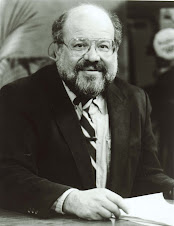
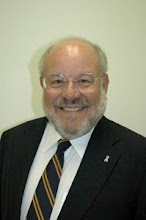
Nice Article About Me
A real nice article about me out yesterday on Networking Magazine -- at http://networkingmagazineusa.com/green-business-leader/

Sunday, July 22, 2012
Poverty and the 1% on Long Island
Poverty and extreme wealth on Long Island, where I live, have been in the national spotlight in recent days. HBO this month broadcast a powerful documentary “Hard Times: Lost on Long Island.” Filmmaker Marc Levin followed four Long Island families who suddenly became poor.
They’re not rarities. A commission established by the Suffolk County Legislature has been holding hearings about how 6.1% of the county’s 1.4 million residents now live below what the U.S. government considers the poverty line ($22,113 a year for a family of four). The hearings’ title: “Struggling in Suburbia: Meeting the Challenges of Poverty in Suffolk County.”
There have “long been pockets of poverty, created by race and income segregation” on Long Island, editorialized the New York Times on July 7. “But it is not just pockets of poverty anymore. These days the struggle has metastasized: foreclosed homes are just as empty in the better-off subdivisions, with the same weed-choked yards, plywood windows and mold-streaked clapboard siding…Long Island’s two counties, Nassau and Suffolk, have the second-and third-highest foreclosure rates in New York State.”
The four Long Island families presented in “Hard Times: Lost on Long Island,” as Verne Gay wrote in his Newsday review, “aren’t whiners or slackers, but desperate and afraid.”
All had extensive educations and well-paying jobs, and then in the Great Recession were tossed into poverty. Perhaps the most poignant of these stories was that of teacher Heather Hartstein and her husband, David, a chiropractor, of Montauk. He dies at the end of the documentary, which is dedicated to him. Look for a repeat of the excellent work on HBO.
Meanwhile, hyper-expensive fundraisers were held on July 8 in Suffolk for Republican presidential candidate Mitt Romney—and there were demonstrations protesting them.
There was a $50,000-a-plate fundraiser at the Southampton residence of David and Julia Koch. He’s the oil industry billionaire who with his brother, Charles, has been directing huge amounts of money into far right-wing political efforts, and now the Romney campaign.
There are some GOPers who charge that President Obama’s re-election campaign is seeking to gain political advantage by stirring up a “class-conflict” in the U.S. When the charge for a fundraiser is $50,000-a-plate, that‘s not about “class conflict.” Most upper-class people can’t afford a $50,000 lunch tab. It’s related to the Occupy Wall Street movement’s charge about the ultra-rich—1% of the population—owning nearly all the assets of this country.
“Romney has a Koch Problem,” read a banner towed by an airplane flying near the Koch estate on Meadow Lane. This was repeated on banners carried by many of the 200 protesters on the ground. “We’re here because of David Koch and his vow to purchase a president,” Anthony Zenkus of Occupy Wall Street told CNN. “It doesn’t sound like democracy to me.” It sure doesn’t.
Another Romney fundraiser was at the East Hampton mansion of billionaire Revlon chairman Ron Perelman. Here the charge was $25,000 to have a photo taken with Mr. Romney. Lunch itself was $5,000 a person, $7,500 a couple (almost a lunch two-for-one).
The third was back on Meadow Lane in Southampton at the estate of Clifford Sobel, who, after chairing fundraising in New Jersey for President George W. Bush’s first campaign, was rewarded with ambassadorships to the Netherlands and Brazil. Diplomat Sobel’s background: making a fortune selling store fixtures.
The demonstrators came from many organizations in addition to Occupy Wall Street including Occupy The East End, Greenpeace, Long Island Jobs with Justice, Long Island Progressive Coalition, MoveOn.org and NY Communities for Change.
The New York Times summarized the situation by declaring that “what was billed as a day of elegant campaign events at the homes of the ultrarich turned out to be an afternoon of curious and clashing tableaus: protesters with their bandanas and Occupy Wall Street-inspired chants (‘We got sold out, banks got bailed out!’) standing amid multimillion-dollar mansions, where live bands played ‘Margaritaville’ and donors dined on prosciutto-wrapped melon balls.”
Meanwhile, there’s news that home foreclosures on Long Island grew in the last three months. Poverty increases—and the 1% pay big to dominate the governmental system.
They’re not rarities. A commission established by the Suffolk County Legislature has been holding hearings about how 6.1% of the county’s 1.4 million residents now live below what the U.S. government considers the poverty line ($22,113 a year for a family of four). The hearings’ title: “Struggling in Suburbia: Meeting the Challenges of Poverty in Suffolk County.”
There have “long been pockets of poverty, created by race and income segregation” on Long Island, editorialized the New York Times on July 7. “But it is not just pockets of poverty anymore. These days the struggle has metastasized: foreclosed homes are just as empty in the better-off subdivisions, with the same weed-choked yards, plywood windows and mold-streaked clapboard siding…Long Island’s two counties, Nassau and Suffolk, have the second-and third-highest foreclosure rates in New York State.”
The four Long Island families presented in “Hard Times: Lost on Long Island,” as Verne Gay wrote in his Newsday review, “aren’t whiners or slackers, but desperate and afraid.”
All had extensive educations and well-paying jobs, and then in the Great Recession were tossed into poverty. Perhaps the most poignant of these stories was that of teacher Heather Hartstein and her husband, David, a chiropractor, of Montauk. He dies at the end of the documentary, which is dedicated to him. Look for a repeat of the excellent work on HBO.
Meanwhile, hyper-expensive fundraisers were held on July 8 in Suffolk for Republican presidential candidate Mitt Romney—and there were demonstrations protesting them.
There was a $50,000-a-plate fundraiser at the Southampton residence of David and Julia Koch. He’s the oil industry billionaire who with his brother, Charles, has been directing huge amounts of money into far right-wing political efforts, and now the Romney campaign.
There are some GOPers who charge that President Obama’s re-election campaign is seeking to gain political advantage by stirring up a “class-conflict” in the U.S. When the charge for a fundraiser is $50,000-a-plate, that‘s not about “class conflict.” Most upper-class people can’t afford a $50,000 lunch tab. It’s related to the Occupy Wall Street movement’s charge about the ultra-rich—1% of the population—owning nearly all the assets of this country.
“Romney has a Koch Problem,” read a banner towed by an airplane flying near the Koch estate on Meadow Lane. This was repeated on banners carried by many of the 200 protesters on the ground. “We’re here because of David Koch and his vow to purchase a president,” Anthony Zenkus of Occupy Wall Street told CNN. “It doesn’t sound like democracy to me.” It sure doesn’t.
Another Romney fundraiser was at the East Hampton mansion of billionaire Revlon chairman Ron Perelman. Here the charge was $25,000 to have a photo taken with Mr. Romney. Lunch itself was $5,000 a person, $7,500 a couple (almost a lunch two-for-one).
The third was back on Meadow Lane in Southampton at the estate of Clifford Sobel, who, after chairing fundraising in New Jersey for President George W. Bush’s first campaign, was rewarded with ambassadorships to the Netherlands and Brazil. Diplomat Sobel’s background: making a fortune selling store fixtures.
The demonstrators came from many organizations in addition to Occupy Wall Street including Occupy The East End, Greenpeace, Long Island Jobs with Justice, Long Island Progressive Coalition, MoveOn.org and NY Communities for Change.
The New York Times summarized the situation by declaring that “what was billed as a day of elegant campaign events at the homes of the ultrarich turned out to be an afternoon of curious and clashing tableaus: protesters with their bandanas and Occupy Wall Street-inspired chants (‘We got sold out, banks got bailed out!’) standing amid multimillion-dollar mansions, where live bands played ‘Margaritaville’ and donors dined on prosciutto-wrapped melon balls.”
Meanwhile, there’s news that home foreclosures on Long Island grew in the last three months. Poverty increases—and the 1% pay big to dominate the governmental system.
Wednesday, July 18, 2012
Nuclear Foxes Guarding the Nuclear Hen Houses -- A Global Pattern
The conclusion of a report of a Japanese parliamentary panel that the Fukushima Daiichi nuclear power plant disaster was rooted in government-industry “collusion” and thus was “man-made” is mirrored throughout the world. The “regulatory capture” cited by the panel is the pattern among nuclear agencies right up to the International Atomic Energy Agency.
“The Fukushima nuclear power plant accident was the result of collusion between the government, the regulators and Tepco [Tokyo Electric Power Company, the owner of the six Fukushima plants] and the lack of governance by said parties,” said the 641-page report of The Fukushima Nuclear Accident Independent Investigation Commission released on July 5. “They effectively betrayed the nation’s right to be safe from nuclear accidents. Therefore, we conclude that the accident was clearly ‘man-made,’” said the report of the panel established by the National Diet or parliament of Japan.
“We believe the root causes were the organizational and regulatory system that supported faulty rationales for decisions and actions,” it went on. “Across the board, the commission found ignorance and arrogance unforgivable for anyone or any organization that deals with nuclear power.” It said nuclear regulators in Japan and Tepco “all failed to correctly develop the most basic safety requirements.”
The chairman of the 10-member panel, Kiyoshi Kurokawa, a medical doctor, declared in the report’s introduction: “It was a profoundly man-made disaster—that could and should have been foreseen and prevented.” He also placed blame on cultural traits in Japan. “What must be admitted—very painfully,” wrote Dr. Kurokawa, “is that this was a disaster ‘Made in Japan.’ Its fundamental causes are to be found in the ingrained conventions of Japanese culture; our reflexive obedience; our reluctance to question authority; our devotion to ‘sticking with the programme’; our groupism; and our insularity.”
In fact, the nuclear regulatory situation in Japan is the rule globally. In the United States, for example, the U.S. Nuclear Regulatory Commission and its predecessor agency, the Atomic Energy Commission, never denied a construction or operating license for a nuclear power plant anywhere, anytime. The NRC has been busy in recent times not only giving the go-ahead to new nuclear power plant construction in the U.S., despite the Fukushima disaster, but extending the operating licenses of most of the 104 existing plants from 40 to 60 years—although they were only designed to run for 40 years. That’s because radioactivity embrittles their metal components and degrades other parts after 40 years making the plants unsafe to operate.
And the NRC is now considering extending their licenses for 80 years. Moreover, the NRC’s chairman, Gregory Jaczko, recently resigned in the face of an assault on him by the nuclear industry and his four fellow NRC members led by William D. Magwood, IV. Magwood is typical of most NRC and AEC commissioners through the decades—a zealous promoter of nuclear power. He came to the NRC after running Advanced Energy Strategies through which he served as a consultant to various companies involved with nuclear power including many in Japan—among them Tepco. Before that, Magwood served as director of nuclear energy for the U.S. Department of Energy. He “led the creation,” according to his NRC biography, of DOE programs pushing nuclear power, “Nuclear Power 2010” and “Generation IV.” Prior to that, he worked for the Edison Electric Institute and Westinghouse, a major nuclear power plant manufacturer.
Jaczko, although a supporter of nuclear power, with a Ph.D. in physics, repeatedly called for the NRC to apply “lessons learned” from the Fukushima disaster to its rules and actions—upsetting the industry and the other four NRC commissioners. As Jaczko declared in February as the other four NRC commissioners first approved the construction of new nuclear plants since Fukushima, giving the go-ahead to two plants in Georgia: “I cannot support issuing this license as if Fukushima had never happened.”
The NRC was set up to be an independent regulator of nuclear power to replace the AEC which was established by Congress under the Atomic Energy Act of 1946. The AEC was given the dual missions of promoting and regulating nuclear power—a conflict of interest, Congress realized in 1974, so it eliminated the AEC and created the NRC as regulator and, later, the Department of Energy as promoter of nuclear power. But both the NRC and DOE have ended up pushing nuclear power with revolving doors between them and the government’s national nuclear laboratories—and the nuclear industry.
The International Atomic Energy Agency was established as an international version of the AEC by the United Nations after a speech made at it by President Dwight Eisenhower in 1953 in which he espoused “Atoms for Peace.” Its dual missions are serving as a monitor of nuclear technology globally while also seeking “to accelerate and enlarge the contribution of atomic energy to peace, health and prosperity throughout the world.”
Its first director general was Sterling Cole who as a U.S. congressman was a big booster of nuclear power. Later came Hans Blix after he led a move in his native Sweden against an effort to close nuclear plants there. Blix was outspoken in seeking to spread nuclear power internationally calling for “resolute response by government, acting individually or together as in the [IAE] Agency.”
Blix’s long-time IAEA second-in command was Morris Rosen—formerly of the AEC and before that the nuclear division of General Electric (which manufactured the Fukushima plants)—who said after the 1986 Chernobyl nuclear plant disaster: “There is very little doubt that nuclear power is a rather benign industrial enterprise and we may have to expect catastrophic accidents from time to time.”
Mohamed ElBaradei of Egypt followed Blix, and as he told an “International Conference on Nuclear Power for the 21st Century” organized by the IAEA in 2005: “There is clearly a sense of rising expectations for nuclear power.” The current IAEA director general is Yukiya Amano of Japan. In Vienna at the heaquarters of the IAEA, marking the first anniversary of the Fukushima disaster in March, Amano said: “Nuclear power is now safer than it was a year ago.”
Really?
Shuya Nomura, a member of the Japanese investigation commission and a professor at the Chuo Law School, was quoted in the New York Times as saying that the panel’s report tried to “shed light on Japan’s wider structural problems, on the pus that pervades Japanese society.” And, noted the Times, he added, “This report contains hints on how Japanese society needs to change.” Those “wider structural problems” are far wider than Japan—they are global. The “regulatory capture” cited in the Japanese panel’s report has occurred all over the world—with the nuclear industry and those promoting nuclear power in governments making sure that the nuclear foxes are in charge of the nuclear hen houses.
The “pus that pervades Japanese society” is international. With some very important exceptions, people have not adequately taken on the nuclear authorities. And we all must. The nuclear promoters have set up a corrupt system to enable them to get their way with their deadly technology. They have lied, they have connived, they have distorted governments. The nuclear industry is thus allowed to do whatever it wants. The nuclear pushers must be firmly challenged and they and nuclear power must be stopped.
“The Fukushima nuclear power plant accident was the result of collusion between the government, the regulators and Tepco [Tokyo Electric Power Company, the owner of the six Fukushima plants] and the lack of governance by said parties,” said the 641-page report of The Fukushima Nuclear Accident Independent Investigation Commission released on July 5. “They effectively betrayed the nation’s right to be safe from nuclear accidents. Therefore, we conclude that the accident was clearly ‘man-made,’” said the report of the panel established by the National Diet or parliament of Japan.
“We believe the root causes were the organizational and regulatory system that supported faulty rationales for decisions and actions,” it went on. “Across the board, the commission found ignorance and arrogance unforgivable for anyone or any organization that deals with nuclear power.” It said nuclear regulators in Japan and Tepco “all failed to correctly develop the most basic safety requirements.”
The chairman of the 10-member panel, Kiyoshi Kurokawa, a medical doctor, declared in the report’s introduction: “It was a profoundly man-made disaster—that could and should have been foreseen and prevented.” He also placed blame on cultural traits in Japan. “What must be admitted—very painfully,” wrote Dr. Kurokawa, “is that this was a disaster ‘Made in Japan.’ Its fundamental causes are to be found in the ingrained conventions of Japanese culture; our reflexive obedience; our reluctance to question authority; our devotion to ‘sticking with the programme’; our groupism; and our insularity.”
In fact, the nuclear regulatory situation in Japan is the rule globally. In the United States, for example, the U.S. Nuclear Regulatory Commission and its predecessor agency, the Atomic Energy Commission, never denied a construction or operating license for a nuclear power plant anywhere, anytime. The NRC has been busy in recent times not only giving the go-ahead to new nuclear power plant construction in the U.S., despite the Fukushima disaster, but extending the operating licenses of most of the 104 existing plants from 40 to 60 years—although they were only designed to run for 40 years. That’s because radioactivity embrittles their metal components and degrades other parts after 40 years making the plants unsafe to operate.
And the NRC is now considering extending their licenses for 80 years. Moreover, the NRC’s chairman, Gregory Jaczko, recently resigned in the face of an assault on him by the nuclear industry and his four fellow NRC members led by William D. Magwood, IV. Magwood is typical of most NRC and AEC commissioners through the decades—a zealous promoter of nuclear power. He came to the NRC after running Advanced Energy Strategies through which he served as a consultant to various companies involved with nuclear power including many in Japan—among them Tepco. Before that, Magwood served as director of nuclear energy for the U.S. Department of Energy. He “led the creation,” according to his NRC biography, of DOE programs pushing nuclear power, “Nuclear Power 2010” and “Generation IV.” Prior to that, he worked for the Edison Electric Institute and Westinghouse, a major nuclear power plant manufacturer.
Jaczko, although a supporter of nuclear power, with a Ph.D. in physics, repeatedly called for the NRC to apply “lessons learned” from the Fukushima disaster to its rules and actions—upsetting the industry and the other four NRC commissioners. As Jaczko declared in February as the other four NRC commissioners first approved the construction of new nuclear plants since Fukushima, giving the go-ahead to two plants in Georgia: “I cannot support issuing this license as if Fukushima had never happened.”
The NRC was set up to be an independent regulator of nuclear power to replace the AEC which was established by Congress under the Atomic Energy Act of 1946. The AEC was given the dual missions of promoting and regulating nuclear power—a conflict of interest, Congress realized in 1974, so it eliminated the AEC and created the NRC as regulator and, later, the Department of Energy as promoter of nuclear power. But both the NRC and DOE have ended up pushing nuclear power with revolving doors between them and the government’s national nuclear laboratories—and the nuclear industry.
The International Atomic Energy Agency was established as an international version of the AEC by the United Nations after a speech made at it by President Dwight Eisenhower in 1953 in which he espoused “Atoms for Peace.” Its dual missions are serving as a monitor of nuclear technology globally while also seeking “to accelerate and enlarge the contribution of atomic energy to peace, health and prosperity throughout the world.”
Its first director general was Sterling Cole who as a U.S. congressman was a big booster of nuclear power. Later came Hans Blix after he led a move in his native Sweden against an effort to close nuclear plants there. Blix was outspoken in seeking to spread nuclear power internationally calling for “resolute response by government, acting individually or together as in the [IAE] Agency.”
Blix’s long-time IAEA second-in command was Morris Rosen—formerly of the AEC and before that the nuclear division of General Electric (which manufactured the Fukushima plants)—who said after the 1986 Chernobyl nuclear plant disaster: “There is very little doubt that nuclear power is a rather benign industrial enterprise and we may have to expect catastrophic accidents from time to time.”
Mohamed ElBaradei of Egypt followed Blix, and as he told an “International Conference on Nuclear Power for the 21st Century” organized by the IAEA in 2005: “There is clearly a sense of rising expectations for nuclear power.” The current IAEA director general is Yukiya Amano of Japan. In Vienna at the heaquarters of the IAEA, marking the first anniversary of the Fukushima disaster in March, Amano said: “Nuclear power is now safer than it was a year ago.”
Really?
Shuya Nomura, a member of the Japanese investigation commission and a professor at the Chuo Law School, was quoted in the New York Times as saying that the panel’s report tried to “shed light on Japan’s wider structural problems, on the pus that pervades Japanese society.” And, noted the Times, he added, “This report contains hints on how Japanese society needs to change.” Those “wider structural problems” are far wider than Japan—they are global. The “regulatory capture” cited in the Japanese panel’s report has occurred all over the world—with the nuclear industry and those promoting nuclear power in governments making sure that the nuclear foxes are in charge of the nuclear hen houses.
The “pus that pervades Japanese society” is international. With some very important exceptions, people have not adequately taken on the nuclear authorities. And we all must. The nuclear promoters have set up a corrupt system to enable them to get their way with their deadly technology. They have lied, they have connived, they have distorted governments. The nuclear industry is thus allowed to do whatever it wants. The nuclear pushers must be firmly challenged and they and nuclear power must be stopped.
Sunday, June 3, 2012
Inviting Atomic Catastrophe
The U.S. Nuclear Regulatory Commission will be holding a meeting this week to consider having nuclear power plants run 80 years—although they were never seen as running for more than 40 years because of radioactivity embrittling metal parts and otherwise causing safety problems.
“The idea of keeping these reactors going for 80 years is crazy!” declares Robert Alvarez, senior scholar at the Institute for Policy Studies and former senior policy advisor at the U.S, Department of Energy and a U.S. Senate senior investigator. He is also an author of the book Killing Our Own: The Disaster of America’s Experience with Atomic Radiation. “To double the design life of these plants—which operate under high-pressure, high heat conditions and are subject to radiation fatigue—is an example of out-of-control hubris, of believing your own lies.”
"In a post-Fukushima world, the NRC has no case to renew life-spans of old, danger-prone nuke plants. Rather, they must be shut down,” says Priscilla Star, director of the Coalition Against Nukes. “This is an absurdity and shows the extent to which the NRC is captured,” says Jim Riccio, nuclear policy analyst at Greenpeace.
“Nuclear regulators know that embrittlement of the reactor vessels limits nuclear plant life but are willing to expose the public to greater risks from decrepit, old and leaking reactors. As we learned from Fukushima, the nuclear industry is willing to expose the public to catastrophic risks.”
Nevertheless, on Thursday at its headquarters in Rockville, Maryland, the NRC is to hold a meeting with the Department of Energy’s Office of Nuclear Energy and the Electric Power Research Institute, which does studies for the nuclear industry, “to discuss and coordinate long-term operability research programs,” says the NRC, which could lead to it letting nuclear plants run for 80 years. For more than a decade, the NRC has been extending the operating licenses of nuclear plants from 40 years to 60 years.
And just as the NRC has never denied a construction or operating license for a nuclear plant anywhere, anytime in the U.S., it has rubber-stamped every application that has come before it for a 20-year extension of the plant’s original 40-year license. It has now approved 60-year operating licenses for 73 of the 104 nuclear power plants in the U.S.
When the NRC in 2009 OK’d extending the operating license to 60 years of the oldest nuclear plant in the U.S., Oyster Creek in New Jersey, Jeff Titel, president of the New Jersey Sierra Club, declared: “This decision is radioactive. To keep open the nation’s oldest nuclear power plant for another 20 years is just going to lead to a disaster. We could easily replace the plant with 200 windmills that will not pose a danger.”
With the same General Electric design as the six Fukushima nuclear power plants, the plant is 60 miles south of New York City. The first nuclear plants given permission by the NRC to operate for 60 years were the two Calvert Cliffs plants located on the western shore of Chesapeake Bay near Lusby, Maryland, 45 miles southeast of Washington, D.C. That came in 1999. The NRC license extension program is “blind to how these machines are breaking apart at the molecular level…they embrittle, crack and corrode,” said Paul Gunter, then with the Nuclear Information and Resource Service and now director of the Reactor Oversight Project of the organization Beyond Nuclear. The NRC in its “rigged game” is driving the nation toward a nuclear disaster, said Gunter. “The term ‘nuclear safety’ is an oxymoron. It’s an inherently dangerous process and an inherently dangerous industry that has been aging.”
The Associated Press conducted “a yearlong investigation of aging issues at the nation’s nuclear power plants” and, in a report in June 2011 by Jeff Donn, declared: “Regulators now contend that the 40-year limit was chosen for economic reasons and to satisfy safety concerns, not for safety issues. They contend that a nuclear plant has no technical limit on its life. But an AP review of historical records, along with interviews with engineers who helped develop nuclear power, shows just the opposite: Reactors were made to last only 40 years. Period.” http://www.patriotledger.com/mobile/x706705448/Regulators-extending-life-spans-of-40-year-nuclear-plants.
Moreover, “the AP found that the relicensing process often lacks fully independent safety reviews. Records show that paperwork of the U.S. Nuclear Regulatory Commission sometimes matches word-for-word the language used in a plant operator’s application.” Also, under the NRC’s “relicensing rules, tight standards are not required to compensate for decades of wear and tear.” Getting operating license extensions “is a lucrative deal for operators,” said the AP.
With operating license extensions, operators of nuclear power plants can wring out as much profits as they can. And not only do they want their plants to operate beyond their 40-year design basis, but they have been asking—and getting approval from the NRC—to have their plants generate more electricity than they were designed to provide, to run hotter and harder.
The NRC calls this “uprating”—and has obliged the industry on this, too, simultaneous with extending the operating licenses of nuclear plants. Alvarez commented last week: “Would you want to drive around in an 80-year-old automobile souped-up to go twice as fast as it was supposed to?” “They are pushing these machines at levels and for time periods for which they were not envisioned operating,” said Alvarez.
Much of “this 80-year business,” he added, involves a concern by the nuclear industry that “they’re not going to build any new reactors anytime soon”—thus the push to keep existing plants running. And, a “root cause” is that those behind nuclear power “operate in isolation, secrecy and privilege and only talk to themselves. They form an echo chamber. They cast out those who do not agree. These are the prime ingredients of corruption of science and safety.”
By extending the operating licenses of nuclear plants, the NRC is inviting catastrophe. It’s asking for it. The gargantuan problem is that the “it” is atomic catastrophe which, as the 1986 Chernobyl nuclear plant disaster and last year’s Fukushima catastrophe have demonstrated, impacts on huge numbers of people and other forms of life. It’s high time the NRC be abolished along with the toxic technology it promotes: nuclear power. And we fully embrace and implement safe, clean renewable energy technologies here today, led by solar and wind energy, rendering deadly dangerous nuclear power totally unnecessary.
“The idea of keeping these reactors going for 80 years is crazy!” declares Robert Alvarez, senior scholar at the Institute for Policy Studies and former senior policy advisor at the U.S, Department of Energy and a U.S. Senate senior investigator. He is also an author of the book Killing Our Own: The Disaster of America’s Experience with Atomic Radiation. “To double the design life of these plants—which operate under high-pressure, high heat conditions and are subject to radiation fatigue—is an example of out-of-control hubris, of believing your own lies.”
"In a post-Fukushima world, the NRC has no case to renew life-spans of old, danger-prone nuke plants. Rather, they must be shut down,” says Priscilla Star, director of the Coalition Against Nukes. “This is an absurdity and shows the extent to which the NRC is captured,” says Jim Riccio, nuclear policy analyst at Greenpeace.
“Nuclear regulators know that embrittlement of the reactor vessels limits nuclear plant life but are willing to expose the public to greater risks from decrepit, old and leaking reactors. As we learned from Fukushima, the nuclear industry is willing to expose the public to catastrophic risks.”
Nevertheless, on Thursday at its headquarters in Rockville, Maryland, the NRC is to hold a meeting with the Department of Energy’s Office of Nuclear Energy and the Electric Power Research Institute, which does studies for the nuclear industry, “to discuss and coordinate long-term operability research programs,” says the NRC, which could lead to it letting nuclear plants run for 80 years. For more than a decade, the NRC has been extending the operating licenses of nuclear plants from 40 years to 60 years.
And just as the NRC has never denied a construction or operating license for a nuclear plant anywhere, anytime in the U.S., it has rubber-stamped every application that has come before it for a 20-year extension of the plant’s original 40-year license. It has now approved 60-year operating licenses for 73 of the 104 nuclear power plants in the U.S.
When the NRC in 2009 OK’d extending the operating license to 60 years of the oldest nuclear plant in the U.S., Oyster Creek in New Jersey, Jeff Titel, president of the New Jersey Sierra Club, declared: “This decision is radioactive. To keep open the nation’s oldest nuclear power plant for another 20 years is just going to lead to a disaster. We could easily replace the plant with 200 windmills that will not pose a danger.”
With the same General Electric design as the six Fukushima nuclear power plants, the plant is 60 miles south of New York City. The first nuclear plants given permission by the NRC to operate for 60 years were the two Calvert Cliffs plants located on the western shore of Chesapeake Bay near Lusby, Maryland, 45 miles southeast of Washington, D.C. That came in 1999. The NRC license extension program is “blind to how these machines are breaking apart at the molecular level…they embrittle, crack and corrode,” said Paul Gunter, then with the Nuclear Information and Resource Service and now director of the Reactor Oversight Project of the organization Beyond Nuclear. The NRC in its “rigged game” is driving the nation toward a nuclear disaster, said Gunter. “The term ‘nuclear safety’ is an oxymoron. It’s an inherently dangerous process and an inherently dangerous industry that has been aging.”
The Associated Press conducted “a yearlong investigation of aging issues at the nation’s nuclear power plants” and, in a report in June 2011 by Jeff Donn, declared: “Regulators now contend that the 40-year limit was chosen for economic reasons and to satisfy safety concerns, not for safety issues. They contend that a nuclear plant has no technical limit on its life. But an AP review of historical records, along with interviews with engineers who helped develop nuclear power, shows just the opposite: Reactors were made to last only 40 years. Period.” http://www.patriotledger.com/mobile/x706705448/Regulators-extending-life-spans-of-40-year-nuclear-plants.
Moreover, “the AP found that the relicensing process often lacks fully independent safety reviews. Records show that paperwork of the U.S. Nuclear Regulatory Commission sometimes matches word-for-word the language used in a plant operator’s application.” Also, under the NRC’s “relicensing rules, tight standards are not required to compensate for decades of wear and tear.” Getting operating license extensions “is a lucrative deal for operators,” said the AP.
With operating license extensions, operators of nuclear power plants can wring out as much profits as they can. And not only do they want their plants to operate beyond their 40-year design basis, but they have been asking—and getting approval from the NRC—to have their plants generate more electricity than they were designed to provide, to run hotter and harder.
The NRC calls this “uprating”—and has obliged the industry on this, too, simultaneous with extending the operating licenses of nuclear plants. Alvarez commented last week: “Would you want to drive around in an 80-year-old automobile souped-up to go twice as fast as it was supposed to?” “They are pushing these machines at levels and for time periods for which they were not envisioned operating,” said Alvarez.
Much of “this 80-year business,” he added, involves a concern by the nuclear industry that “they’re not going to build any new reactors anytime soon”—thus the push to keep existing plants running. And, a “root cause” is that those behind nuclear power “operate in isolation, secrecy and privilege and only talk to themselves. They form an echo chamber. They cast out those who do not agree. These are the prime ingredients of corruption of science and safety.”
By extending the operating licenses of nuclear plants, the NRC is inviting catastrophe. It’s asking for it. The gargantuan problem is that the “it” is atomic catastrophe which, as the 1986 Chernobyl nuclear plant disaster and last year’s Fukushima catastrophe have demonstrated, impacts on huge numbers of people and other forms of life. It’s high time the NRC be abolished along with the toxic technology it promotes: nuclear power. And we fully embrace and implement safe, clean renewable energy technologies here today, led by solar and wind energy, rendering deadly dangerous nuclear power totally unnecessary.
Saturday, June 2, 2012
David Brower
In honor of the 100th anniversary of the birth of David Brower, founder and chair of Earth Island Institute, founder and chair of Friends of the Earth and long-time executive director of the Sierra Club, EnviroVideo has re-issued a 1996 Enviro Close-Up interview I did with Mr. Brower. It is being aired nationally this month on Free Speech TV. And it can be viewed online at --
http://blip.tv/envirovideo/david-brower-ecu-617-6181648
Among other things, he tells of how his opposition to nuclear power led to losing his position at the Sierra Club.
Sunday, May 27, 2012
Nuclear Rubberstamp Commission
The resignation last week of the chairman of the U.S. Nuclear Regulatory Commission is another demonstration of the bankrupt basis of the NRC. Gregory Jaczko repeatedly called for the NRC to apply "lessons learned" from the Fukushima Daiichi nuclear plant disaster in Japan. And, for that, the nuclear industry—quite successfully—went after him fiercely.
The New York Times in an editorial over the weekend said that President Obama’s choice to replace Jaczko, Allison Macfarlane, “will need to be as independent and aggressive as Dr. Jaczko.” http://www.nytimes.com/2012/05/26/opinion/nuclear-power-after-fukushima.html
That misses the institutional point. The NRC was created in 1974 when Congress abolished the U.S. Atomic Energy Commission after deciding that the AEC’s dual missions of promoting and at the same time regulating nuclear power were deemed a conflict of interest.
The AEC was replaced by the NRC which was to regulate nuclear power, and a Department of Energy was later formed to advocate for it. However, the same extreme pro-nuclear culture of the AEC continued on at the NRC. It has partnered with the DOE in promoting nuclear power. Indeed, neither the AEC, in its more than 25 years, nor the NRC, in its nearly 30 years, ever denied an application for a construction or operating license for a nuclear power plant anywhere, anytime in the United States. The NRC is a rubberstamp for the nuclear industry.
“NRC stands for Nuclear Rubberstamp Commission,” says Kevin Kamps of the organization Beyond Nuclear.
And it isn’t that Jaczko opposed nuclear power. “Greg is not anti-nuclear, but he’s pro-nuclear in a smart and considered way,” says Christopher Paine, director of the nuclear program at the Natural Resources Defense Council.
Since the Fukushima accident began last March 11, Jaczko, who has a Ph.D. in physics, has called on the NRC to recognize and incorporate in its rules and actions, the gravity of that catastrophe. As he declared as his four fellow NRC members approved the construction of two nuclear plants in Georgia in February—the first OK for new nuclear plants in the U.S. in years: "I cannot support issuing this license as if Fukushima had never happened.”
“Greg has led a Sisyphean fight against some of the nuclear industry’s opponents of strong, lasting regulations, often serving as the lone vote,” commented Congressman Edward Markey of Massachusetts after the Jaczko resignation.
The nuclear industry and promoters of nuclear power in government would have us believe that Fukushima means nothing. As the American Nuclear Society asserts on its website: “No public ill effects are expected from the Fukushima incident.” http://www.ans.org/misc/FukushimaRadiationQ&A_LS.pdf
In reality, the consequences—in Japan and all over the world—are expected to be enormous. They’ll be worse than the impacts of the Chernobyl disaster, says Dr. Alexey Yablokov, a biologist and lead scientist of the book published by the New York Academy of Science in 2009, Chernobyl: Consequences of the Catastrophe for the People and the Environment. It reported that now available medical data shows that that 985,000 people died worldwide between 1986, the year of the Chernobyl accident, and 2004 from the radioactivity released. http://www.globalresearch.ca/index.php?context=va&aid=23745
“The Fukushima disaster will be worse than Chernobyl,” agrees Dr. Janette Sherman, a toxicologist and the book’s editor. That’s because Fukushima involves, she notes, not one but six nuclear plants along with spent fuel pools, in a “far more populated” area than the Chernobyl plant, and the radioactive discharges from Fukushima have continued for months.
Importantly, a new report by a noted European science institute has determined that Chernobyl and Fukushima were not isolated occurrences. “Severe Nuclear Reactor Accidents Likely Every 10 to 20 Years,” was the headline of the article last week on the report in Science Daily. “Catastrophic nuclear accidents such as the core meltdowns in Chernobyl and Fukushima are more likely to happen than previously assumed,” said Science Daily, about the report by scientists at the Max Planck Institute for Chemistry in Mainz, Germany. Based on “the number of nuclear meltdowns that have occurred,” they “calculated that such events may occur once every 10 to 20 years.”
And impacts would be global—like Chernobyl and Fukushima.Their computer analyses, said Science Daily, found for the leading radioactive poison discharged in a nuclear plant accident, Cesium-137, some 8% can be expected to fall within 50 kilometers of the accident site, 50% beyond 1,000 kilometers and 25% beyond 2,000 kilometers. “These results underscore that reactor accidents are likely to cause radioactive contamination well beyond national borders,” said Science Daily. http://www.sciencedaily.com/releases/2012/05/120522134942.htm
Science Daily, like Jaczko, can’t be decried as “anti-nuclear.” But for the nuclear industry and nuclear promoters within government, including the NRC, denial is the watchword. At the NRC in recent months a move has begun to negate what has been its benchmark analysis on the impacts of nuclear plant accidents. “Calculation Reactor Accident Consequences 2,” referred to as the CRAC-2 report. Issued in 1982, it projects the impacts from a meltdown with a breach of containment at every nuclear plant in the U.S. It divides the consequences into “Peak Early Fatalities,” “Peak Early Injuries,” “Peak Cancer Deaths” and “Scaled Costs” for property damage—and the numbers are chilling. For the Indian Point 3 nuclear plant 28 miles north of New York City, for instance, it projects “Peak Early Fatalities” at 50,000, “Peak Early Injuries” at 167,000, “Peak Cancer Deaths” at 14,000 and “Scaled Costs” at $314 billion (in 1980 dollars).
The NRC in January issued a report it seeks to have replace CRAC-2, “State-of-the-Art Reactor Consequences Analyses” or SOARCA. SOARCA finds, according to the NRC, that the “risks of public health consequences from severe accidents” at a nuclear plant “are very small.”
The “long-term risk” of a person dying from cancer from a nuclear plant accident is less than one-in-a billion. This is because “successful implementation of existing mitigation measures can prevent reactor core damage or delay or reduce offsite releases of radioactive material.” Tell that to the people impacted by Chernobyl and Fukushima. Meanwhile, the NRC has been busy extending the operating licenses of existing plants although nuclear plants were never seen as running for more than 40 years because of radioactivity embrittling the metal parts and otherwise causing problems affecting safety.
Nevertheless, the NRC has now extended the licenses of 73 of the 104 nuclear plants in the U.S. to 60 years. And next Thursday, June 7, at its headquarters, the NRC is holding a meeting with DOE and the industry’s Electric Power Research Institute on extending licenses to 80 years. Consider the reliability of an 80-year old car.
A “Petition for Rulemaking to Improve Emergency Planning Regulations” was brought to the NRC in February by the Nuclear Information and Resource Service and 37 safe-energy and environmental groups. It declared that “the real-world experience of the Chernobyl and Fukushima disasters…were more severe and affected a much larger geographical area than provided for in NRC regulations” and asked, among other things, for the NRC to expand its current 10-mile evacuation planning zone around nuclear plants.
“Waiting to see how bad an emergency gets before expanding evacuation…is not a plan of action, it is a recipe for disaster and an abdication of responsibility.” The likely NRC response? No. On that issue, the nuclear industry was extremely upset that Jaczko, after the Fukushima accident began, advised U.S. citizens within 50 miles of the exploding nuclear complex to evacuate. It sought to continue the myth that 10 miles were fine.
As for the proposed new chair of the NRC, Allison Macfarlane, if she seeks to push safety, as the New York Times thinks she can, she would be crucified—just like Jaczko. The solution? Abolish the Nuclear Rubberstamp Commission—and shut down every nuclear power plant in the U.S. They provide just 20% of our electricity and this could be substituted for with electricity generated by safe, clean, renewable energy sources such as solar and wind—without the loss of lives.
The New York Times in an editorial over the weekend said that President Obama’s choice to replace Jaczko, Allison Macfarlane, “will need to be as independent and aggressive as Dr. Jaczko.” http://www.nytimes.com/2012/05/26/opinion/nuclear-power-after-fukushima.html
That misses the institutional point. The NRC was created in 1974 when Congress abolished the U.S. Atomic Energy Commission after deciding that the AEC’s dual missions of promoting and at the same time regulating nuclear power were deemed a conflict of interest.
The AEC was replaced by the NRC which was to regulate nuclear power, and a Department of Energy was later formed to advocate for it. However, the same extreme pro-nuclear culture of the AEC continued on at the NRC. It has partnered with the DOE in promoting nuclear power. Indeed, neither the AEC, in its more than 25 years, nor the NRC, in its nearly 30 years, ever denied an application for a construction or operating license for a nuclear power plant anywhere, anytime in the United States. The NRC is a rubberstamp for the nuclear industry.
“NRC stands for Nuclear Rubberstamp Commission,” says Kevin Kamps of the organization Beyond Nuclear.
And it isn’t that Jaczko opposed nuclear power. “Greg is not anti-nuclear, but he’s pro-nuclear in a smart and considered way,” says Christopher Paine, director of the nuclear program at the Natural Resources Defense Council.
Since the Fukushima accident began last March 11, Jaczko, who has a Ph.D. in physics, has called on the NRC to recognize and incorporate in its rules and actions, the gravity of that catastrophe. As he declared as his four fellow NRC members approved the construction of two nuclear plants in Georgia in February—the first OK for new nuclear plants in the U.S. in years: "I cannot support issuing this license as if Fukushima had never happened.”
“Greg has led a Sisyphean fight against some of the nuclear industry’s opponents of strong, lasting regulations, often serving as the lone vote,” commented Congressman Edward Markey of Massachusetts after the Jaczko resignation.
The nuclear industry and promoters of nuclear power in government would have us believe that Fukushima means nothing. As the American Nuclear Society asserts on its website: “No public ill effects are expected from the Fukushima incident.” http://www.ans.org/misc/FukushimaRadiationQ&A_LS.pdf
In reality, the consequences—in Japan and all over the world—are expected to be enormous. They’ll be worse than the impacts of the Chernobyl disaster, says Dr. Alexey Yablokov, a biologist and lead scientist of the book published by the New York Academy of Science in 2009, Chernobyl: Consequences of the Catastrophe for the People and the Environment. It reported that now available medical data shows that that 985,000 people died worldwide between 1986, the year of the Chernobyl accident, and 2004 from the radioactivity released. http://www.globalresearch.ca/index.php?context=va&aid=23745
“The Fukushima disaster will be worse than Chernobyl,” agrees Dr. Janette Sherman, a toxicologist and the book’s editor. That’s because Fukushima involves, she notes, not one but six nuclear plants along with spent fuel pools, in a “far more populated” area than the Chernobyl plant, and the radioactive discharges from Fukushima have continued for months.
Importantly, a new report by a noted European science institute has determined that Chernobyl and Fukushima were not isolated occurrences. “Severe Nuclear Reactor Accidents Likely Every 10 to 20 Years,” was the headline of the article last week on the report in Science Daily. “Catastrophic nuclear accidents such as the core meltdowns in Chernobyl and Fukushima are more likely to happen than previously assumed,” said Science Daily, about the report by scientists at the Max Planck Institute for Chemistry in Mainz, Germany. Based on “the number of nuclear meltdowns that have occurred,” they “calculated that such events may occur once every 10 to 20 years.”
And impacts would be global—like Chernobyl and Fukushima.Their computer analyses, said Science Daily, found for the leading radioactive poison discharged in a nuclear plant accident, Cesium-137, some 8% can be expected to fall within 50 kilometers of the accident site, 50% beyond 1,000 kilometers and 25% beyond 2,000 kilometers. “These results underscore that reactor accidents are likely to cause radioactive contamination well beyond national borders,” said Science Daily. http://www.sciencedaily.com/releases/2012/05/120522134942.htm
Science Daily, like Jaczko, can’t be decried as “anti-nuclear.” But for the nuclear industry and nuclear promoters within government, including the NRC, denial is the watchword. At the NRC in recent months a move has begun to negate what has been its benchmark analysis on the impacts of nuclear plant accidents. “Calculation Reactor Accident Consequences 2,” referred to as the CRAC-2 report. Issued in 1982, it projects the impacts from a meltdown with a breach of containment at every nuclear plant in the U.S. It divides the consequences into “Peak Early Fatalities,” “Peak Early Injuries,” “Peak Cancer Deaths” and “Scaled Costs” for property damage—and the numbers are chilling. For the Indian Point 3 nuclear plant 28 miles north of New York City, for instance, it projects “Peak Early Fatalities” at 50,000, “Peak Early Injuries” at 167,000, “Peak Cancer Deaths” at 14,000 and “Scaled Costs” at $314 billion (in 1980 dollars).
The NRC in January issued a report it seeks to have replace CRAC-2, “State-of-the-Art Reactor Consequences Analyses” or SOARCA. SOARCA finds, according to the NRC, that the “risks of public health consequences from severe accidents” at a nuclear plant “are very small.”
The “long-term risk” of a person dying from cancer from a nuclear plant accident is less than one-in-a billion. This is because “successful implementation of existing mitigation measures can prevent reactor core damage or delay or reduce offsite releases of radioactive material.” Tell that to the people impacted by Chernobyl and Fukushima. Meanwhile, the NRC has been busy extending the operating licenses of existing plants although nuclear plants were never seen as running for more than 40 years because of radioactivity embrittling the metal parts and otherwise causing problems affecting safety.
Nevertheless, the NRC has now extended the licenses of 73 of the 104 nuclear plants in the U.S. to 60 years. And next Thursday, June 7, at its headquarters, the NRC is holding a meeting with DOE and the industry’s Electric Power Research Institute on extending licenses to 80 years. Consider the reliability of an 80-year old car.
A “Petition for Rulemaking to Improve Emergency Planning Regulations” was brought to the NRC in February by the Nuclear Information and Resource Service and 37 safe-energy and environmental groups. It declared that “the real-world experience of the Chernobyl and Fukushima disasters…were more severe and affected a much larger geographical area than provided for in NRC regulations” and asked, among other things, for the NRC to expand its current 10-mile evacuation planning zone around nuclear plants.
“Waiting to see how bad an emergency gets before expanding evacuation…is not a plan of action, it is a recipe for disaster and an abdication of responsibility.” The likely NRC response? No. On that issue, the nuclear industry was extremely upset that Jaczko, after the Fukushima accident began, advised U.S. citizens within 50 miles of the exploding nuclear complex to evacuate. It sought to continue the myth that 10 miles were fine.
As for the proposed new chair of the NRC, Allison Macfarlane, if she seeks to push safety, as the New York Times thinks she can, she would be crucified—just like Jaczko. The solution? Abolish the Nuclear Rubberstamp Commission—and shut down every nuclear power plant in the U.S. They provide just 20% of our electricity and this could be substituted for with electricity generated by safe, clean, renewable energy sources such as solar and wind—without the loss of lives.
Wednesday, May 2, 2012
Murdoch's Mission In Media -- Politics
With the finding this week by a committee of the British Parliament that Rupert Murdoch is “not a fit person to exercise the stewardship of a major international company,” the Federal Communications Commission should move to prohibit Murdoch from owning television stations in the United States.
The licensing system for TV and radio stations in the U.S. requires that their owners be of good character. It also mandates that only U.S. citizens hold a major interest in a station —the reason why Murdoch became a U.S. citizen in 1985 as he moved to create a U.S.-based media empire. His Australian citizenship went, but as for his questionable character, that remained.
In its extensive and scathing report on the hacking and bribery scandal in the U.K. involving Murdoch’s News Corporation, the Parliamentary committee declared that Murdoch “turned a blind eye and exhibited willful blindness to what was going on in his companies and publications. This culture, we consider, permeated from the top.”
The “claim that phone-hacking could be dismissed as the work of a single ‘rogue reporter’…was a false one,” said the committee about the assertion of Murdoch and his son James in earlier testimony before it.
“As a result of our own investigation, but also of civil cases currently before the courts, Lord Justice Leveson’s inquiry and investigative journalism, there has been a steady flow of evidence which, taken together, comprehensively discredits that assertion. This is beyond dispute.”
“Rupert Murdoch is certainly not, as part of his evidence would have us believe, a ‘hands-off proprietor,’” the panel stated.
Indeed, last week, Murdoch finally acknowledged to the committee that there was a “cover-up” of the scandal in which he took part. The report, said the BBC, “directly questioned the integrity and honesty of Rupert Murdoch” and could lead to a determination in the U.K. that Murdoch’s company “is not fit and proper to hold a broadcasting license.”
When the Federal Communications Act—the regulatory structure for radio and later also TV in the U.S.—was initially enacted in 1934, a similar standard requiring station owners to be “stewards” of the public airwaves became law in America.
Broadcast media, it was reasoned, were using a limited resource—the airwaves—and thus standards were needed to be set for who could own a station. Unlike newspapers, there could not be a virtually unlimited number of stations—frequencies were finite and use of them should only be granted to those of good character committed to serving the public interest. That also applies when a station undergoes a periodic process of relicensing.
If the owners are found guilty of a felony, an anti-trust violation, a fraudulent statement to a governmental entity, discrimination, among other things, they can lose their license to operate the station. This is what should now happen to Murdoch in the U.S.
A problem is that the Federal Communications Commission, which enforces the Federal Communications Act, has—like so many U.S. regulatory agencies—been a lapdog to rather than a watchdog of industry. Dark Genius by Kerwin Swint, a book about Roger Ailes who with Murdoch put together the hard right-wing Fox News Channel, notes that Murdoch “has always gotten what he wanted out of the FCC.”
This included, in 1993, the FCC waiving “its cross-ownership rule—barring a company from owning a newspaper and/or a radio or TV station in the same market.” Murdoch’s mission in media is politics. “At Murdoch’s media companies,” writes Swint, “his operations are often used for expressly political purposes.”
For example, the “New York Post is not profitable in a financial sense for Murdoch, but it has been invaluable to him as a battering ram for political causes and vendettas….He has skillfully used his media properties to advance political agendas , and conversely, has used those political assets to advance his media properties.”
There have been outrageous media barons through the years. Citizen Kane, often considered America’s finest movie, is about the meglomania of William Randolph Hearst. But Murdoch has operated—in the U.K., in the U.S., indeed all over the world—as what William Shawcross in Murdoch, his biography of Murdoch, describes as "an international Citizen Kane, with influence beyond imagining."
His cynicism—such as the Fox News Channel proclaiming to be exactly what it’s not, “fair and balanced”—is profound. The quantity of his media holdings is vast. And some are extremely important. He now owns 150 newspapers in Australia including The Australian, the nation's biggest paper. In the U.K., he bought what had been the most distinguished newspaper in the English-speaking world, The Times of London, the quality of which has been downgraded under Murdoch.
His other U.K. holdings include Sky Television. In the U.S. his holdings, in addition to the New York Post, include The Wall Street Journal which he has been using to take on The New York Times to become the leading American newspaper. His News Corporation also owns the giant book-publishing company, HarperCollins; 20th Century Fox movie studio; 20th Century Fox Television and Fox Broadcasting Company.
His U.S. cable TV assets in addition to Fox News Channel include Fox Movie Channel and Fox Business Network. Murdoch’s holdings also extend to Asia, Europe, Africa, the Middle East, and Latin America. All in all, his News Corporation owns more than 800 media companies in more than 50 countries.
According to Forbes magazine, Murdoch’s net worth is now $8.3 billion making him, says Forbes, the 106th richest person in the world, the 38th richest in the U.S.
“With News Corp undoubtedly facing increased regulatory scrutiny in the U.S. as the phone-hacking scandal expands in the U.K., the company is acting to correct a breach of FCC laws regarding foreign ownership,” the website Studio Briefing reported last month. “The media conglomerate will likely suspend half the voting rights of foreign shareholders to bring it into compliance with FCC rules limiting foreign ownership of broadcasting stations to 25 percent.” The largest foreign shareholder, it said, is Saudi Prince Al-Waleed bin Talal bin Abdulaziz Al Saud who “owns 7 percent of News Corp’s voting stock.” Now what about the man at the top—Rupert Murdoch—and the requirement of integrity?
The licensing system for TV and radio stations in the U.S. requires that their owners be of good character. It also mandates that only U.S. citizens hold a major interest in a station —the reason why Murdoch became a U.S. citizen in 1985 as he moved to create a U.S.-based media empire. His Australian citizenship went, but as for his questionable character, that remained.
In its extensive and scathing report on the hacking and bribery scandal in the U.K. involving Murdoch’s News Corporation, the Parliamentary committee declared that Murdoch “turned a blind eye and exhibited willful blindness to what was going on in his companies and publications. This culture, we consider, permeated from the top.”
The “claim that phone-hacking could be dismissed as the work of a single ‘rogue reporter’…was a false one,” said the committee about the assertion of Murdoch and his son James in earlier testimony before it.
“As a result of our own investigation, but also of civil cases currently before the courts, Lord Justice Leveson’s inquiry and investigative journalism, there has been a steady flow of evidence which, taken together, comprehensively discredits that assertion. This is beyond dispute.”
“Rupert Murdoch is certainly not, as part of his evidence would have us believe, a ‘hands-off proprietor,’” the panel stated.
Indeed, last week, Murdoch finally acknowledged to the committee that there was a “cover-up” of the scandal in which he took part. The report, said the BBC, “directly questioned the integrity and honesty of Rupert Murdoch” and could lead to a determination in the U.K. that Murdoch’s company “is not fit and proper to hold a broadcasting license.”
When the Federal Communications Act—the regulatory structure for radio and later also TV in the U.S.—was initially enacted in 1934, a similar standard requiring station owners to be “stewards” of the public airwaves became law in America.
Broadcast media, it was reasoned, were using a limited resource—the airwaves—and thus standards were needed to be set for who could own a station. Unlike newspapers, there could not be a virtually unlimited number of stations—frequencies were finite and use of them should only be granted to those of good character committed to serving the public interest. That also applies when a station undergoes a periodic process of relicensing.
If the owners are found guilty of a felony, an anti-trust violation, a fraudulent statement to a governmental entity, discrimination, among other things, they can lose their license to operate the station. This is what should now happen to Murdoch in the U.S.
A problem is that the Federal Communications Commission, which enforces the Federal Communications Act, has—like so many U.S. regulatory agencies—been a lapdog to rather than a watchdog of industry. Dark Genius by Kerwin Swint, a book about Roger Ailes who with Murdoch put together the hard right-wing Fox News Channel, notes that Murdoch “has always gotten what he wanted out of the FCC.”
This included, in 1993, the FCC waiving “its cross-ownership rule—barring a company from owning a newspaper and/or a radio or TV station in the same market.” Murdoch’s mission in media is politics. “At Murdoch’s media companies,” writes Swint, “his operations are often used for expressly political purposes.”
For example, the “New York Post is not profitable in a financial sense for Murdoch, but it has been invaluable to him as a battering ram for political causes and vendettas….He has skillfully used his media properties to advance political agendas , and conversely, has used those political assets to advance his media properties.”
There have been outrageous media barons through the years. Citizen Kane, often considered America’s finest movie, is about the meglomania of William Randolph Hearst. But Murdoch has operated—in the U.K., in the U.S., indeed all over the world—as what William Shawcross in Murdoch, his biography of Murdoch, describes as "an international Citizen Kane, with influence beyond imagining."
His cynicism—such as the Fox News Channel proclaiming to be exactly what it’s not, “fair and balanced”—is profound. The quantity of his media holdings is vast. And some are extremely important. He now owns 150 newspapers in Australia including The Australian, the nation's biggest paper. In the U.K., he bought what had been the most distinguished newspaper in the English-speaking world, The Times of London, the quality of which has been downgraded under Murdoch.
His other U.K. holdings include Sky Television. In the U.S. his holdings, in addition to the New York Post, include The Wall Street Journal which he has been using to take on The New York Times to become the leading American newspaper. His News Corporation also owns the giant book-publishing company, HarperCollins; 20th Century Fox movie studio; 20th Century Fox Television and Fox Broadcasting Company.
His U.S. cable TV assets in addition to Fox News Channel include Fox Movie Channel and Fox Business Network. Murdoch’s holdings also extend to Asia, Europe, Africa, the Middle East, and Latin America. All in all, his News Corporation owns more than 800 media companies in more than 50 countries.
According to Forbes magazine, Murdoch’s net worth is now $8.3 billion making him, says Forbes, the 106th richest person in the world, the 38th richest in the U.S.
“With News Corp undoubtedly facing increased regulatory scrutiny in the U.S. as the phone-hacking scandal expands in the U.K., the company is acting to correct a breach of FCC laws regarding foreign ownership,” the website Studio Briefing reported last month. “The media conglomerate will likely suspend half the voting rights of foreign shareholders to bring it into compliance with FCC rules limiting foreign ownership of broadcasting stations to 25 percent.” The largest foreign shareholder, it said, is Saudi Prince Al-Waleed bin Talal bin Abdulaziz Al Saud who “owns 7 percent of News Corp’s voting stock.” Now what about the man at the top—Rupert Murdoch—and the requirement of integrity?
Subscribe to:
Posts (Atom)